

Land Clearing, Grading, and Demolition: Getting a Site Ready to Build
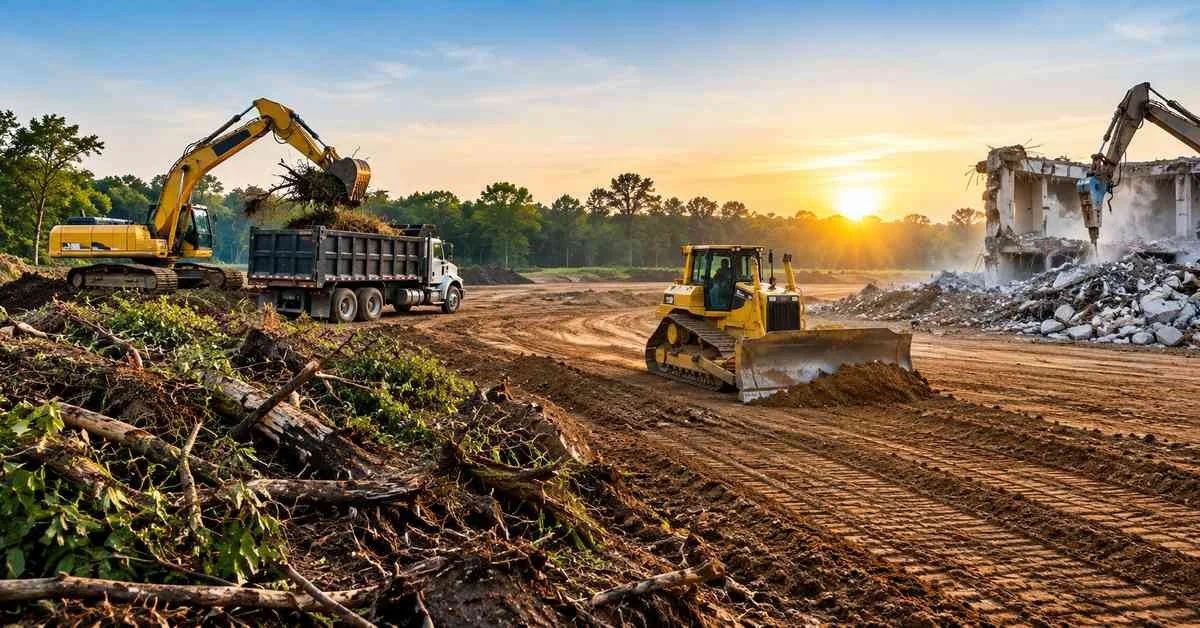
Most people picture a construction project starting with a foundation. In reality, it starts with the ground itself. Trees, stumps, an old shed, a lot that slopes the wrong way any of these can quietly drive up costs once the building crew arrives and finds the site isn’t ready.
This article covers the three jobs that usually come first: land clearing, demolition, and grading. We’ll look at what each one involves, how they fit together, what tends to move the price, and what to look for when you hire someone to do the work.
Why the Ground Work Matters More Than It Seems
A slab or footing is only as steady as the soil beneath it, and that soil is only as steady as the way it was cleared, shaped, and compacted. When site work gets rushed, the problems tend to surface later: water pooling against a wall, a driveway that cracks, fill that settles, a slope that washes out in the first heavy rain.
Site work also sets the pace for everyone else. Concrete crews, framers, plumbers, and electricians all need a lot they can reach, with level ground where it counts and no debris in the way.
Local knowledge helps here. In the Tennessee Valley, hardwood stands, rolling hills, and clay-heavy soil are common, and each one affects how a lot should be handled. A Land clearing contractor Cleveland TN who works in that terrain regularly will know how seasonal rain changes a schedule and where drainage trouble tends to show up, which means fewer fixes after building begins.
Land Clearing: Opening Up the Property
Land clearing means removing the vegetation and surface obstacles that stand between you and a usable site. Depending on the property, that could include trees, brush, stumps, rocks, old fencing, and years of accumulated debris.
How much gets removed depends on the plan. Some owners want selective clearing, where only the trees and brush in the way come out and mature trees stay for shade or privacy. Others need full clearing across the building area, driveway route, and work zones. On badly overgrown lots, crews often start by cutting back undergrowth just so everyone can see what they’re dealing with.
Stumps and Roots
Stumps are the part people tend to underestimate. If a stump or root system is left under a future building pad, it will rot over time and leave voids in the soil. The ground above can then settle unevenly. That’s why crews grub out roots, or grind stumps, in any area that will carry a structure, road, or parking surface.
What Happens to the Debris
Everything that comes off the lot has to go somewhere. Wood can be chipped into mulch, material can be hauled away, and in some places burning is allowed under certain conditions. Rules differ by county and sometimes by season, so ask who is responsible for permits before the work starts.
Deciding What Stays
Good clearing is as much about what you leave standing as what you take down. Marked property lines, protected specimen trees, and heavy equipment kept away from root zones can preserve the character of a lot. A quick walk-through with the crew before work begins avoids the awkward moment when a tree you wanted to keep is already on the ground.
Demolition: Clearing Out What’s Already There
Plenty of properties aren’t empty. There may be an old house, a barn, a garage, a commercial building, or just a concrete slab left over from something that burned down years ago. All of it has to come out before new construction can move forward.
Demolition comes in a few forms. Some jobs involve taking down an entire structure. Others are partial, such as removing a damaged wing or an addition. Foundation and slab removal is its own task, and so is clearing smaller items like sheds, retaining walls, or abandoned pools.
Before Anything Comes Down
Older buildings can contain hazardous materials, including asbestos and lead-based paint, and these have to be identified and handled according to the rules that apply. Utilities must be properly disconnected and capped before equipment shows up. Permits are common, and the requirements vary between cities and counties across Tennessee, Georgia, and Alabama. A responsible contractor will walk you through these steps instead of skipping past them.
Reusing Materials
Not everything has to end up in a landfill. Clean concrete, metal, and some wood can often be recycled. Crushed concrete, for example, is frequently reused as a base layer for driveways and pads. It’s worth asking about, since it can lower disposal costs and keep material out of the waste stream.
Grading: Shaping the Land
Once the lot is clear, grading reshapes it. The goal is to adjust slope and elevation so the site is stable enough to build on and water drains where it should.
Rough grading comes first. Heavy equipment cuts down high spots, fills low ones, and roughs in the general form of the site, including building pads, driveways, and drainage paths. Finish grading happens later, after foundations and utilities are in, and it refines the surface for landscaping, paving, or final stabilization.
Water Is the Real Concern
The most important thing grading does is send water away from structures. A well-built house can still have moisture problems, shifting foundations, or washed-out landscaping if the ground around it slopes the wrong way. Thoughtful grading uses gentle slopes to move runoff toward swales, ditches, or culverts without pushing erosion onto a neighbor’s land.
Compaction and Stability
Fill dirt has to be placed in layers and compacted so it can carry weight without settling. Loose fill is a common cause of cracked slabs and sinking driveways. On some projects, an engineer or geotechnical review is worth the cost to confirm the soil can support what you plan to build.
Keeping Soil Where It Belongs
Bare, disturbed ground washes away quickly in heavy rain. Silt fences, sediment basins, straw cover, and prompt seeding help keep soil out of creeks and storm drains. Many jurisdictions require erosion control on larger projects, so it should be part of the plan from the beginning rather than an afterthought.
How the Three Jobs Fit Together
These services work best as a sequence rather than three unrelated projects. A typical order runs like this:
- Confirm boundaries, utility locations, and easements, and settle the layout.
- Obtain permits and arrange utility locates.
- Demolish existing structures and haul away debris.
- Clear trees, brush, stumps, and roots from the work area.
- Complete rough grading and set up drainage.
- Install and maintain erosion control throughout.
- Finish grade and stabilize the surface for construction or landscaping.
When one team coordinates the whole sequence, there are fewer handoffs, equipment doesn’t have to be brought in twice, and the schedule is easier to predict. When separate contractors handle each stage, a delay in one place often spreads to the rest.
What Affects Cost and Timeline
Two properties are rarely alike, which is why reputable contractors usually give estimates only after seeing the site. A few factors do most of the work in shaping both price and schedule:
- Size of the area. More ground means more machine hours, though the per-acre cost can sometimes drop on larger parcels.
- Vegetation. Dense hardwoods and large stumps take more labor and heavier equipment than light brush.
- Terrain and access. Steep slopes, soft ground, and narrow access routes slow everything down.
- Disposal. Hauling distance, chipping, and landfill fees all add up.
- Weather. Wet conditions can stop heavy equipment and raise the risk of erosion, so leave some room in the schedule.
- Surprises. Buried debris, old septic tanks, unmarked utilities, or unstable soil can expand the scope once digging begins.
A written estimate should spell out what’s included and how unexpected conditions will be handled. That protects both you and the contractor.
SEE MORE: Window and Glass Care for Pacific Northwest Homes: A Practical Guide for Boring, Oregon Homeowners
Choosing a Contractor
Whoever you hire will affect the safety, quality, and stress level of the whole project, so it’s worth comparing more than price.
Start with local experience, because contractors who work in your area understand the soils, the weather, and how permitting tends to go. Then look at their equipment and operators. Excavators, dozers, and grinders are powerful machines, and skilled operators work faster and are less likely to damage things they shouldn’t.
Ask for proof of liability insurance and workers’ compensation, and confirm that any required local licenses are in place. If something goes wrong on your property, that paperwork matters.
It also helps to see how a company communicates. A good contractor explains the plan in plain language, answers questions without dodging, and tells you promptly when conditions change. Photos of finished jobs and a few references from past clients are a reasonable way to check their track record. Pay attention, too, to how they treat the property and the neighbors: tidy staging, reasonable noise and dust control, and a proper cleanup say a lot.
A Few Things You Can Do Beforehand
You don’t need to be an expert to make site work go more smoothly. Walk the property and mark any trees or features you want to keep. Gather whatever surveys, plats, or plans you already have. Ask about permits early, since approvals can take time. Decide whether you’d like to keep any of the mulch for landscaping. Think about drainage now instead of trying to correct it after the house is up. And set aside a modest cushion in your budget for whatever the ground turns out to be hiding.
Wrapping Up
Clearing, demolition, and grading rarely get the attention that framing or finish work does, but everything built afterward depends on them. Clearing opens the land, demolition removes what no longer belongs, and grading shapes the lot for stability and drainage. When the three are planned together and handled by an experienced, properly equipped crew, you end up with a site that’s safe, workable, and ready for construction.
Take the time to understand your property, ask plenty of questions, and hire someone who values careful planning as much as the heavy machinery. A well-prepared site saves money, avoids delays, and gives the project a solid start.
Frequently Asked Questions
Do I need to clear the land before or after demolishing an old building?
Usually after. Demolition comes first so crews can remove the structure and debris, then clearing handles the trees, brush, and stumps left around it. Your contractor may adjust the order based on how the lot is laid out.
What happens if stumps are left under a building pad?
They decay over time and leave empty pockets in the soil. The ground above can settle unevenly, which may lead to cracked slabs or shifting foundations. That’s why stumps and roots are removed or ground out in any area that will carry a structure.
What is the difference between rough grading and finish grading?
Rough grading shapes the overall site by cutting high spots, filling low ones, and setting up building pads and drainage paths. Finish grading comes later, once foundations and utilities are in, and smooths the surface for landscaping, paving, or final stabilization.
Can I keep certain trees on my property during clearing?
Yes. Selective clearing removes only what’s in the way. Mark the trees you want to keep before work begins, and ask the crew to keep heavy equipment away from their root zones.
Do I need a permit for demolition or land clearing?
Often, yes, though requirements vary by city and county. Demolition commonly requires permits and proper utility disconnection, and some areas have rules about burning or erosion control. Ask your contractor who will handle approvals before the job starts.
Why does drainage matter so much in site preparation?
Water that flows toward a structure can cause moisture problems, foundation movement, and erosion. Proper grading directs runoff away from buildings and toward swales, ditches, or culverts.
What can change the cost of a site preparation project?
The main factors are the size of the area, how dense the vegetation is, the terrain and access, debris disposal, weather, and unexpected finds such as buried debris or unmarked utilities. A written estimate that explains what’s included helps avoid surprises.
What should I ask a contractor before hiring them?
Ask about local experience, proof of liability insurance and workers’ compensation, any required licenses, how debris will be handled, and who is responsible for permits. References and photos of completed projects are also useful.

Related Posts
Window and Glass Care for Pacific Northwest Homes: A Practical Guide for Boring, Oregon Homeowners

Fence Installation Guide: How to Choose and Maintain the Right Fence
