
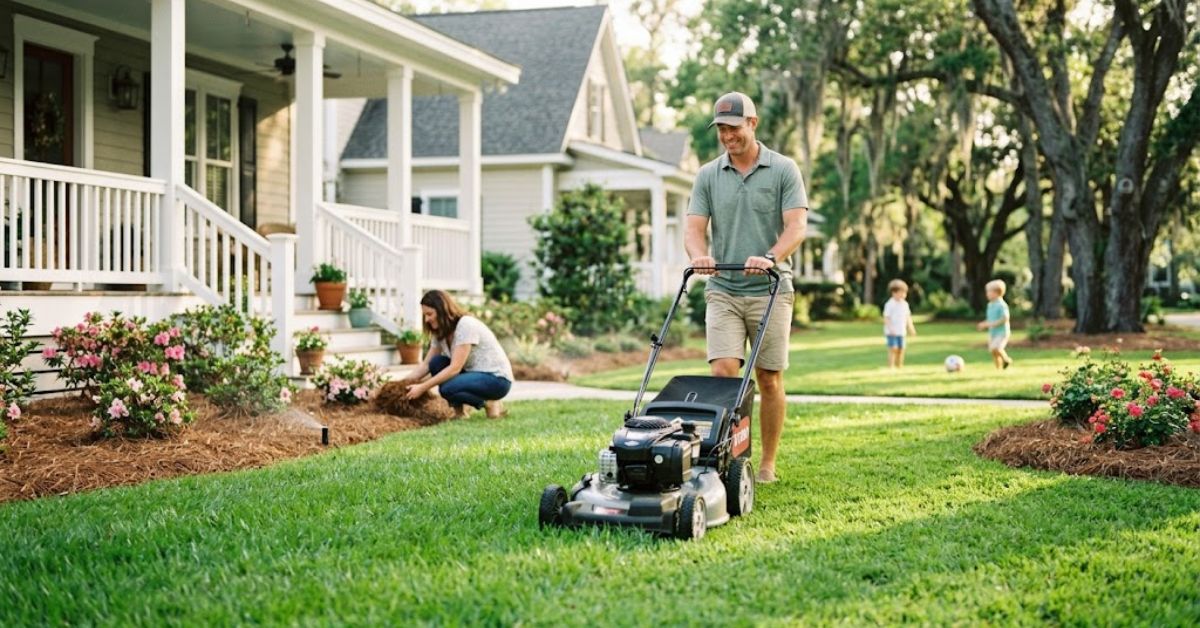
If you live in the Lowcountry, you already know that keeping a lawn green and healthy here isn’t quite the same as it is in other parts of the country. Between the humid summers, sandy soil, salty coastal air, and the occasional tropical downpour, Charleston-area lawns face a unique set of challenges. But with the right approach, it’s absolutely possible to have a lush, thick, weed-free yard that holds up through every season.
Whether you’re a homeowner in Clements Ferry, Cainhoy, or anywhere else in the greater Charleston area, this guide walks through the essentials of year-round lawn care — from mowing habits to seasonal treatments to knowing when it’s time to bring in the professionals. If your lawn has been struggling lately, working with a trusted local team like Yard Art Landscaping can save you a lot of trial and error, especially since local experts already understand which grass types and treatment schedules work best for our specific climate.
The Lowcountry Climate and Your Lawn
Before diving into any lawn care routine, it helps to understand what you’re working with. The Charleston region sits in a warm, humid subtropical climate zone. Summers are long, hot, and sticky, while winters are mild with only occasional frost. This means most lawns here are planted with warm-season grasses such as Bermuda, Zoysia, Centipede, or St. Augustine — all of which thrive in heat but go dormant (and turn brown) during the cooler months.
Sandy, well-draining soil is common throughout areas like Clements Ferry and Cainhoy, which means water and nutrients can wash through quickly. That’s part of why so many local lawns struggle with patchy growth or yellowing despite regular watering. Understanding your soil type and grass variety is the first step toward building a lawn care plan that actually works instead of guessing at solutions that work elsewhere in the country.
Mowing the Right Way
It sounds simple, but mowing incorrectly is one of the most common reasons lawns look unhealthy. A few basic rules make a big difference:
- Never cut more than one-third of the grass blade at a time. Scalping your lawn stresses the roots and opens the door to weeds and disease.
- Keep mower blades sharp. Dull blades tear grass instead of cutting it cleanly, leaving ragged edges that turn brown and become entry points for pests.
- Adjust mowing height by season. Most warm-season grasses do best slightly taller during peak summer heat, which helps shade the soil and retain moisture.
- Vary your mowing pattern. Mowing in the same direction every time can compact soil and create ruts over time.
If you’re mowing weekly during the growing season (which is typical for Bermuda and Zoysia lawns in this climate), you’re already ahead of most homeowners. But mowing alone won’t get you a truly healthy lawn — it needs to be paired with proper watering, fertilization, and pest control.
Watering Smart, Not Just Often
One of the biggest mistakes homeowners make is watering too frequently but too shallowly. Short, frequent watering encourages roots to stay near the surface, making the lawn more vulnerable to drought stress and heat damage. Instead, aim for deep, infrequent watering — generally about one inch of water per week, either from rainfall or irrigation, delivered in one or two sessions rather than daily sprinkles.
Early morning is the best time to water, ideally between 5 a.m. and 9 a.m. This timing reduces evaporation loss and gives grass blades time to dry out before evening, which helps prevent fungal issues that thrive in humid, damp conditions overnight — a real concern in coastal South Carolina.
Seasonal Lawn Care: What to Do and When
A healthy lawn isn’t the result of one-time effort; it’s the product of consistent, season-appropriate care throughout the year.
Spring (March–May): This is green-up season for warm-season grasses. Apply a balanced, slow-release fertilizer once the lawn is actively growing, not before. Spring is also the ideal time for pre-emergent weed control to stop crabgrass and other summer weeds before they germinate.
Summer (June–August): Growth peaks during these hot, humid months. Regular mowing, deep watering, and monitoring for pests like chinch bugs and grubs are top priorities. This is also when fungal diseases like brown patch can appear if drainage or watering habits aren’t dialed in correctly.
Fall (September–November): As temperatures cool, growth slows. This is a great window for aeration, which relieves soil compaction and allows water, air, and nutrients to reach the root zone more effectively. Overseeding with a winter rye grass can also keep your yard green through the cooler months if you want color year-round.
Winter (December–February): Most warm-season lawns go dormant and turn brown, which is completely normal. Minimal mowing and watering are needed, but this is a good time for tree and shrub pruning, mulching flower beds, and planning next year’s landscaping projects.
Aeration, Fertilization, and Soil Health
Because so much of the Charleston area sits on sandy or compacted soil, aeration deserves special attention. Core aeration — pulling small plugs of soil out of the lawn — reduces compaction and helps roots grow deeper and stronger. Most lawns benefit from aeration once a year, typically in early fall for warm-season grasses.
Fertilization should always be based on what your soil actually needs. A simple soil test can reveal pH levels and nutrient deficiencies, which helps avoid over-fertilizing (which wastes money and can harm nearby waterways) or under-fertilizing (which leaves your lawn thin and weak). A tailored fertilization program, especially one designed around Lowcountry soil conditions, tends to produce far better results than a generic store-bought bag of fertilizer applied on a guess.
Weed, Pest, and Disease Management
Weeds, insects, and fungal diseases are a fact of life for any lawn, but they’re especially persistent in warm, humid regions like Charleston. Some of the most common issues local homeowners deal with include:
- Crabgrass and chickweed, which spread quickly in warm weather and choke out desirable grass
- Chinch bugs, which damage St. Augustine grass by sucking moisture from the blades
- Brown patch fungus, which thrives in humid, poorly drained lawns
- Mole crickets and grubs, which damage root systems from below the surface
Catching these problems early is key. A lawn that’s mowed, watered, and fertilized correctly is naturally more resistant to pests and disease, but targeted treatments are sometimes necessary when an infestation or outbreak takes hold. Rotating treatments and avoiding overuse of any single product also helps prevent resistance from building up over time.
Custom Landscaping: Beyond Basic Lawn Care
A healthy lawn is the foundation, but many homeowners in areas like Clements Ferry and Cainhoy also want their outdoor space to feel like a true extension of their home. This is where custom landscaping design comes in — flower beds, mulching, shrub and tree care, irrigation upgrades, and even landscape lighting can transform a plain yard into a standout property.
Pine straw mulching, for example, is popular throughout the Lowcountry because it retains moisture well in sandy soil while giving flower beds a clean, finished look. Landscape lighting has also become a popular addition, extending the usability and curb appeal of outdoor spaces well into the evening hours.
If you’re not sure where to start, working with an experienced local landscaping team takes the guesswork out of the process. Companies like Yard Art Landscaping offer maintenance packages that combine mowing, fertilization, aeration, and design work into one coordinated plan, which tends to produce more consistent results than piecing together services from multiple providers. You can learn more about their approach to lawn maintenance and design work at lawncareservicecharleston.com.
DIY vs. Hiring a Professional
Plenty of homeowners enjoy doing their own lawn care, and for smaller yards with straightforward grass types, that’s entirely doable with the right knowledge and consistency. However, there are a few signs it might be time to bring in professional help:
- Your lawn has persistent bare or patchy spots despite regular care
- You’re unsure what type of grass you have or how to treat it properly
- Weeds or pests keep coming back no matter what you try
- You don’t have the time or equipment for aeration, dethatching, or seasonal treatments
- You want a cohesive landscaping design, not just mowing
Professional lawn care teams bring specialized equipment, product knowledge, and local climate expertise that’s hard to replicate with store-bought products and general online advice. For many homeowners, the time and stress saved is well worth the investment, especially during peak growing season when lawns need the most attention.
Final Thoughts
A healthy, green lawn in the Charleston area is absolutely achievable, but it requires understanding the local climate, sticking to a seasonal care schedule, and paying attention to the specific needs of warm-season grasses growing in sandy coastal soil. Mowing correctly, watering deeply rather than frequently, aerating annually, and staying ahead of weeds and pests will get most homeowners most of the way there.
For those who’d rather leave it to the experts, local lawn care and landscaping companies serving Clements Ferry, Cainhoy, and the surrounding Charleston area can handle everything from routine mowing to full landscape design, so your yard stays beautiful in every season without the guesswork.